Showing posts with label Book Review. Show all posts

Wednesday, March 15, 2017

Midwinter Mischief at Old Sturbridge Village

Stephen and I went on a Midwinter Mischief tour at Old Sturbridge Village on February 4th. It was their first day of the special program. We went on an afternoon tour, but it was still the first day of a new program. The program was a semi-guided tour, with a meal included for $20 for non-members, which is a very decent price.

From the OSV visitor center we were lead by a costumed guide who walked us across the village to the Bullard Tavern. He stopped us halfway through to recite a verse about the experience we were about to have. He was very awkward, dropping his lines and struggling with the tempo and rhyme scheme of the verses. I got the impression this was not his idea of a good time. But when we were met at the tavern by “Mr. Bullard” he was enthusiastic in his acting. He encouraged us to eat first and assured us we’d get on a tour, but we declined since we’d eaten in the car on the way down. After using the restroom, we asked where we could catch our 1:45 tour, it turned out the 1:30 tour had not left yet so we jumped in on the end of the orientation for that tour.

The orientation was lead by the “town gossip” who was very good at making everyone laugh as she handed out cards to each person with the “role” we would be playing. Everyone got a nicely printed glossy card with a silhouette on one side and a paragraph about the role on the other. In the sitting room of the tavern another costumed person came in to tell us , in verse, about the peddler who spent last night at the tavern, ran up a tab he could not pay, and promised the tavern keep that he would return “with a tin cup overflowing with Gold”. The costumed person (who I’m told was supposed to be a tavern regular)told us the peddler then went to the Tinsmith shop, and we should go there to look for him. He did not follow us, but pointed the group in the right direction, we all walked ourselves (I think there were just under a dozen up is on this particular tour) over to the Tin Shop.

Inside the tin shop we were given some basic interpretations by the two men working in the tin shop, and one of them almost sounded like he was speaking in verse but it was so natural and interspersed with info on smithing and the history of peddlers that it was hard to tell. We spent about 10 minutes in the tin shop before they told us the peddler went on to the Parsonage, and we should look for him there. Over the course of the tour we visited:
- The Parsonage, grating chocolate with the parson’s daughter, getting a sermon on the evils of drink from the parson.
- A house in the village, helping dip candles,
- The village store, learning about what was sold there and buying on credit,
- The schoolhouse, getting a lesson
- The pottery, doing some hands-on wheel work
- The barn, sawing some firewood
- The farmhouse kitchen, making sausages
- Another kitchen, baking pies
- The blacksmith shop, shoeing oxen
- Outside visiting, with an oxen pair.
All of these stops were roughly ten minutes in length, all involved some interpretation, at least one hands-on opportunity for someone in the group, plus a few verses of script about “that pesky Peddler.” Each stop felt like a pretty good length, with a good mix of learning and story. None of the walks between buildings were so long that they felt arduous, and even though most of the stops the group had to stand, there were enough sitting stops mixed in that the general visitor did not feel too worn out by the end. We almost bumped into the group before us twice, but both times they were coming out as we went in, and we never ended up waiting for them. We never ran into the group behind us. Nor did it feel like the interpreter/actors were watching the clock, or rushing us through, their timing was very good.

After the last stop, our visit with the oxen, we were met by the last actor, a skinny young man in a top hat who did even more verse speaking, heading back up to the tavern. He was dressed quite differently from the other interpreter/actors, and was a better actor than most of them. Halfway through the walk back toward the tavern he produced a tin cup, giving the first inkling that this was the peddler we’d been “looking for” during our tour. For a little while at the end of the tour it felt quite clever, how the script had worked our group around to “discovering” the peddler, but by the time we got inside the tavern the clever part felt pretty empty.

My takeaway as we sat eating our soup (they’d kept some warm for us when I’d refused to eat before our tour) was that the “Midwinter Mischief” was a cute gimmick to get people on to the grounds during the month of February. The OSV actor/interpreters were the museum’s regular staff, and while a few did a superb job most of them gave off a distinct air of silly. They were portraying silly town characters, reciting silly lines about a silly peddler. This tour was not something to be taken seriously. In the end, everyone knew the peddler would come out on top, the town was no worse off for his visit, and there was no effect on the lives of real people, real history.

I think that did an incredible disservice to the history that they were interpreting. Every visitor was given a lot of information about life in a New England town in the early 1800s on this tour, but since the script was so gimmicky, and the actors so obviously just reciting their lines and not portraying real people, I believe it was hard for the visitors to go away with any emotional investment in what they had learned. Mystic Seaport does an incredible job using engaging emotional content in their programs, as do some of SBM’s roleplayers, so I know it can be done. Midwinter Mischief’s plot was fairly weak, and definitely came off as an excuse to visit the best houses in the village, not as an interpretation method itself. This could be because OSV hired a theatre person instead of a history person to write and direct their program, but I’ve seen amazing theatre that is emotionally engaging, so that can’t entirely be it.

I think the most I can say about the program is that it is a cute gimmick to get people through the doors, and show off the best of OSV in a winter setting. The worst is that there was so much potential if they had put more emphasis on actual history, and if their staff running the program had felt more comfortable playing their parts.

Read this entry on entry page

Wednesday, February 4, 2015

Book Review: The Same Ax, Twice


Same Axe Twice: Restoration and Renewal in a Throwaway Age, by Howard Mansfield was recommended to me by a colleague at the museum. This book is not just a look at history, it is specifically how we use history, recreate history, honor it, and interact with it today. Every chapter is a series of vignettes of different historical reenactments and recreations: the first airplane, people who make their own telescopes, Civil War Battle reenactments, and more. It turns out there are a ton of really diverse ways that modern Americans are interacting with the past. Mansfield talks about how we here in New England have been interacting with the past since the Victorian era with the invention of “Old Home Days” as a means of cultural celebration and mourning the loss of family members moving away from their local roots.

Mansfield is from New Hampshire, and writing with an incredibly local perspective. This is particularly interesting to me, having grown up here a lot of the villages and towns are familiar. The history of this region is something I grew up with. I think the book would still be interesting to folks outside of the state who enjoy regional sociological studies, but that could just be me. As someone who has both consumed the tourism of the region, as well as worked in the tourism field here, I agree that nostalgia is a part of our touristic appeal. Nostalgia is an odd concept, but one that is important when discussing how people view history, and in this case, New Hampshire history. A few years ago I tried to read “The Past is a foreign country” by David Lowenthall and I admit I did not get very far in that book before I had to return it to the library. “Same Axe” reminds me of Lowenthall’s book, in a smaller format.

I found the whole to be fairly melancholy: guys reviving old engines are described as puttering among the exhaust and nostalgia. American progress is described as a sad state of affairs. After a section on the Nevada atomic test sites Mansfield concludes: “American places are but a moment’s bright flash, followed by long, confused memories.”

But the diversity of history presented and the amount of connections that people were making to the past was inspiring for someone like me who often wonders if I am alone in my obsession with change over time.

Howard Mansfield has written a number of other books on history, I’ve also been told I have to read “In the Memory House” and any number of his other books. I think I’ll wait until a sunny day though, just in case they are as mopey as “Same Axe.”
Read this entry on entry page

Friday, January 23, 2015

Book Review: Past into Present

Is there a book for what I do? For creating, improving, and learning about first-person historical characters? Yes, there is one: Past into Present: Effective Techniques for First-Person Historical Interpretation by Stacy F. Roth. Published in 1998, Roth undertakes to record techniques of first person interpretation as practiced at a number of museums around the US. She looks specifically at interactive interpretation: those where the LH interpreter has conversations with the visitor as opposed to museum theatre, where there is a more set script, and the visitor is more an audience than a participant. In the book, Roth covers the basics like: establishing a vocabulary, the places where first person interpretation is practiced, pros and cons from a practitioner and audience perspective. She goes in depth on how different people at different sites create their interpretations, connect with the public, and deal with different types of audiences.

The book reads less like a how-to and more like an academic dissertation, so it can be difficult to dig pertinent info out of wordy paragraphs for those who are looking for an intorduction. But for those of us of a studious mindset there is plenty to sink your teeth into. The appendixes contain both a glossary of terms, which is very necessary in this field, and a list of “character development” topics that can spur on a beginner, or add depth to an established character.

Roth was not the first person to write about Living History, that distinction goes to Jay Anderson. And there have been books published since, but Roth has not been surpassed, Past into Present is the place to start, and is where we need to return in order to up our art.


. Read this entry on entry page

Monday, January 19, 2015

Series Review: Tales From the Green Valley


After reading The Building of the Green Valley back in 2011 I finally watched the TV series this past month while recovering from minor surgery. What a lovely series. Stephen and I watched it on YouTube, we devoured all 12 episodes in just a few sittings.

The premise: 5 history experts spend a year on a 16th century farm, doing all the things a farm family would do around the year 1620. Each episode represents a month in the year, and starting in September they wear the clothes, plow fields, eat meals, make and use tools, care for livestock, the whole thing. This is not like the reality shows that put “average folks” in historical circumstances, the two women and three men who participate are archaeologists, historians or experts of some sort. We are not subjected to any personality drama, just lovely scenery of Western England, beautifully restored buildings and landscapes, and enthusiastic experimental archaeology.

I am not an expert in 16th Century farming, so they certainly could have made choices that were less than accurate that I missed; but with that caveat, it all felt really good to me. I thought all the activities portrayed on the show: laundry, thatching, land clearing, charcoal burning, haying, cheese making, hog butchery, etc. gave a really good feel both for those who knew nothing about the history, and those of us who strive for accuracy in our own presentations. I definitely learned a bunch. I did not know that much about thatching, or that there was such a thing as a ceramic still for medicine making. In every episode there were times when I would sigh with longing over a besom broom, a lovely landscape, or something else in the show.

Watching Tales from the Green Valley was a really nice way to spend some cold January evenings dreaming about the upcoming reenacting season.


. Read this entry on entry page

Wednesday, January 29, 2014

Book Review: Telling History

Telling History: a manual for Performers and Presenters of First-Person Narratives by Joyce M. Thierer was published just a few short years ago in 2010. I did not hear about it when it came out, I did not hear about it from any museum conferences or mailing lists. I located it during a Google Books search. Since I DO first-person interpretation, and I'm fairy well connected to the pseudo-community of Living History, I was surprised I had not heard of a new book.

Telling History is very specific, it is for those that do big-audience performances, 30 - 40 minute monologues on a stage followed by question sessions at the end. I mostly do interactions in-setting of limited duration, but I'm willing to mine any resource for useful skills and info.

Thierer starts by writing an introduction to the genre, then in her first chapter talks about other types of living history and why they are inferior. She uses generalities, and worst-cases for her opinions, then writes about what she calls "Historical Performance" by calling up its best practices. A fairly messy way to justify your book. Starting with chapter 2 Thierer starts in on the "how to" stuff, and immediately references a PDF document online, on her website. She does not describe the document but continually references it for the next few chapters, practically forcing me to put down the book, wait until I had access to the Internet and enter her URL. Then the URL didn't work. Actually she had a number of different URLs, none of the ones I tried worked. The book does have appendices, I don't understand why the worksheets could not be included in the appendix, with the amount they were referenced.

All that being said, I do still think the book is worth reading. Thierer's guidance on how to pick a person to portray and how to do historical research would be very useful for those just starting out. I found her script writing chapter very informative, and made me think I could actually write my own script to present an interesting historical program. I am not as big a fan of the sit-for-40-minutes sort of program, but if someone manages to follow all of Thierer's best practices, I bet the performance would be pretty good.

I found her chapter on business to be the hardest to get through. It was long, and not as good as a book on the subject of starting a business. Yes, historical theater is unique, I wish she had concentrated on just those parts that were unique. The following chapter, written for museums and other institutions, was much shorter, and crammed full of useful information for the institution and those that want to be hired. Thierer's list of questions that every institution should ask before hiring a performer (and that every performer should be able to answer) is challenging, geared towards those who do a lot of scholarship, and are really professional. It is an aspirational list for those of us not employed as college professors.

Her final chapter is the most ambitious, but possibly the most inspiring. She writes about her dreams for historical theater and includes reaching wider audiences, and a professional organization that develops standards and provides training. These have been goals of mine at some point or another, though at this point I have found enough small groups or institutions doing these things that it is now my goal to organize the groups, or at least make sure people know they exist.

She sticks to basically just two example performances that she keeps returning to: her own experiences playing Calamity Jane, and her partner's experiences as Amelia Earhart. This allows for continuity, but got a bit boring after a while. She was very focused on American History, and specifically mid-west history, but this is what she knows. Those of us who have different geographic or temporal focus can still use a lot of what she presents, just know that the bits on costuming, picking themes, identifying research material can vary widely from her examples.

Thierer's book is well written. It is easy to read just a chapter at a time, but if you stop in the middle of a chapter be prepared to go back and at least skim when you pick it back up. Her book is ambitious and assumes some pretty high standards. These are both good things.

Anyone involved in Living History who is looking to find the book that best describes their own experiences is in for a long search. I have become a gleaner of advice and information, picking up bits from all the diverse books out there. Though Thierer's book is very specifically for those doing performance monologues, there is plenty to be gleaned for those of us who do other sorts of Living History. Read this entry on entry page

Wednesday, July 31, 2013

Book Review: Easy Street

I've just finished Ann-Elizabeth Shapera's book Easy Street: A Guide For Players In Improvised Interactive Environmental Performance, Walkaround Entertainment, And First-Person Historical Interpretation. What a fascinating read. It was written as a guide for Renaissance Faire performers, and for the most part that is exactly what it is, but it reads like a self-help book. I recommend this book to folks starting out at RenFaires, but also for long time living history presenters who have lost their spark and are wondering, why the heck am I doing this?

Shapera performs at many Renaissance Faires as the lovable Jane The Phoole. I've seen her perform, she is very good. I've also run into her at several Reenactorfests. Jane the Phoole is a walk-around character. She spends most of her time on the streets of the faire, interacting with groups of visitors or "patrons". While she does sometimes appear on stage this book deals with the "street" interactions: how you make a street character, how to interact with all kinds of people, how to make interactions positive, uplifting and meaningful to every participant.

It is the uplifting part that Shapera excels at. If your venue is a museum or reenactment, and you want the ability to make magical connections the way performers at Renaissance Raires do, then I highly recommend Easy Street. But if that is the case you might want to skip from chapter 13 right to 18. While the pleasant insights continue in those chapters, a person can get bogged down in the bits that do not apply outside the RenFaire. If you are a participant in the world of Renaissance Faires Shapera does not have much new to say about improvisation, physicality, or Elizabethan England, but she has nicely condensed those staples of RenFaire training.

Throughout the book Shapera stresses the importance of remaining positive, especially when interacting with those that have paid money to come see us. A point with which I highly agree. She includes chapters entitled, "It Only Takes a Moment", "Say Something Nice!", and "Why You Must Never Exclude Patrons, Ever, Not In A Million Years." Her big points of emphasis include  "Include and Elevate" the people you  encounter while plying this craft and "Making it Worth It" for both the audience and the performer reading the book.

Easy Street is self published through Lulu Press and it shows. Many of the chapters could have been merged into longer, more comprehensive sections. Also, Shapera's capitalization of Every Important Bit got very tiresome. It is an Elizabethan mode of writing, but in my opinion, was over-used, especially when paired with the heavy handed formatting.

Of all the training I have undergone to make me the history presenter that I am today, my most meaningful training has been in how to do historical research and how to be a Rennaissance Faire performer. A-E Shaera's Easy Street touches on all the best parts of RenFaire performance, and includes many points from which all presenters of history can benefit. I am glad to have this book on my shelf, it is a worthy addition to LH library. Read this entry on entry page

Sunday, April 14, 2013

Book Review: Man of War By Charlie Schroeder

A few years ago at Reenactorfest after we gave one of our presentations a guy in normal clothes came up to Stephen and asked if his name was Steve. The guy was the younger brother of one of Stephen’s childhood friends, they had grown up in the same neighborhood. Charlie got his photos taken with all of us, and told us that he was writing a book on reenacting in America. My heart sank, I’ve read the travelogue/human guinea pig type book on reenacting in Europe: I Believe in Yesterday and it was less a book about reenacting than it was about a modern man’s failure to cope with the past as it is lived today. The first few chapters of Schroeder’s book were as bad as I feared, I had to drop the book twice before I got far enough in to if that the author started to find his reenactor footing, actually make connections with the folks he was spending time with and get over his culture shock. And his horrible over-use of personal description dependant on the reader knowing what pop culture celebs look like. Sorry Charlie, those of us who spend our time reenacting have limited patience for celebrity scandal of the week.

Because of his culture shock and lack of in-depth research before he started, Schroeder missed out on actually experiencing WWII and Civil War reenacting as most people experience it, but those are just the big ones that everyone does, right? He did seem to find his footing with Romans, and 18th Century reenacting, met some cool people, got hooked on history. But it was not until the final quarter of the book that I felt like Schroeder might actually be saying something about reenacting. He had finally gotten beyond saggy loaner breeches and firing weapons that could just as easily kill the person shooting as those on the other end.

The book’s premise is an incredibly artificial one, reenactors do not hop from one end of the country to the other trying a little of this and a little of that. They spend lifetimes researching, preparing, crafting, traveling and finally experiencing history. Yes, we all have loaner garb and love to have folks dress in our stuff, but usually it is with the hope that they will get hooked and want to get up their own kit and join in.  Schroeder actually does get his own kit, persona, and timeperiod in the final chapter, but he does not join a group, he makes his own reenactment by walking through LA in the footsteps of an early missionary. He goes out of the hobby like he went in, as an outsider looking for something sensational he can write about.


Read this entry on entry page

Thursday, January 31, 2013

What I've been reading

I’ve been listening to audio books while at work, and I’ve been on a World War II kick. I’m on my third book written about Europe during the 3rd Reich takeover, and I’m learning a lot while I sit in front of a computer all day. The first book I listened to was A Spy at the Heart of the Third Reich by Lucas Delattre. This one was about a junior government official who deplored the new practices of the Nazi party, but instead of speaking out and getting thrown in a concentration camp, he continued to do his job well until he had the chance to take all the memos, telegrams, etc. that were a part of his work and give them to an American official in Switzerland. The book was well narrated and full of sympathetic characters.


I was sad when the nine and a half hour book ended, but I had another book in a similar genre that I’d been trying to get through: In the Garden of Beasts by Erik Larson is a recent book and came highly recommended. It is about the American Ambassador to Germany and his family in the 1930s, and how they experienced the rise of Nazi power. I had started reading this one in hardcover, but it was so depressing reading about all the horrible things happening, and knowing that there were so many horrible things to come. The family was so naive at the beginning and I got so disheartened that I put the book down. I picked it up in audio format hoping that my divided attention (computer work) would make the horrors a little more palatable. It also helped that I did not go back and start at the beginning, but at where I’d left off reading. The audio book is almost 13 hours, and I did not particularly like the narrator, but I learned a ton about the early days of Hitler’s chancelory before he became supreme ruler, and about what it meant to be an ambassador in the early 20th Century.


I’ve just started another one, I’m two hours in to a 17.5 hour book called Citizens of London by Lynne Olson about three Americans in Britain during the Battle of Britain and how they shaped America’s entrance into WWII. So far I am entirely tickled, but that could be because one of the three, the American Ambassador to Britain is from New Hampshire, my home state. So far I’m enjoying the narrator, definitely sympathetic to the main characters, and I know things turn out alright for US and England, so I’m hopeful. This one is so long it might take me a month to get through it, but I’ve got a lot of computer work to do.

Read this entry on entry page

Wednesday, October 5, 2011

Book Review: Seize the Day

I found Seize The Day! How to wring more satisfaction from your Civil War reenacting events by Wm. J. Watson while adding a different book to my Amazon wish list. That darn website knows so much about my reading habits, when this book was suggested I added it to my wish list as well. I was given a copy as a gift not long after. It is such a small book that I sat down right away to read it, then carried it around for a few weeks (it fit in my purse!) and finally dug it out to write the review.

How-to books for the beginning reenactor are actually quite common, but vary in quality and concentration. I promise I'll review some of those soon. This book is not for the beginner. It is for the folks who already have a basic kit, are already attending Civil War events, who feel like they've got the basics under control and want to take the next step.

The style of Seize is based loosely on the works of a 19th century author who was writing how-to manuals for 19th century soldiers, but the author is speaking directly to the 21st century reenactor to the purpose of increasing the reader's authenticity, enjoyment, and immersion. Watson sets his chapters out by military rank and manages to cover a lot of ground very quickly. He does not tell you how to drill or cook or guard, he talks about the importance of all the different military tasks, about the expectations of each rank, and about how to be the best in any rank. This could come off as ridiculous or preachy, but I found the advice in this book was well thought out and delivered in a friendly and not at all condescending way. At the end of each chapter I found myself wanting to be a great civil war corporal (or whatever chapter I happened to be reading) even though I have absolutely no desire to reenact the life of a civil war solider. Some chapters are meatier than others. The Clerk chapter includes role-playing scenarios and character types. In chapter 13 the author addresses reenacting recruitment and what is missing from current big events.

There was a lot of useful advice for any era military reenactment: those in charge need to keep an eye out for those folks who may be struggling etc. and it is your job to make sure tasks get done, not necessarily to do them all yourself. There is limited but good advice for those attending reenactment events that are not necessarily military in nature about sharing tasks and keeping camp tidy. The author goes quite in depth on work details and how important they are since setting up and tearing down is something the reenactor must do as well. He is very clear that there are people in charge of making sure this stuff gets done, people who are responsible, people who do their share of work, and consequences in the chain of command for slackers. What a boon for the reenactors as well as being period correct. This removes some of the modern ego from the work detail. The book seems to say: if you are not willing to work, find another hobby with quotes like "we are trying to take everything good that has been done by a lot of hard-working, thoughtful people and take it a step further... It operates like a regiment, not like a reenacting club."

The most exciting part for me came at the very end when Watson recommends that the reader document those methods that work for their group because, "documenting the methods used to achieve success is what this little book is all about, by the way." Read this entry on entry page

Monday, September 12, 2011

Book Review: Intrepid Women

Intrepid Women: Cantinières and Vivandières of the French Army, by Thomas Cardoza, 2010

There are a few books out there on women’s roles in the armies of the past, but not so many that a new book on the scene does not make me happy. Last year when I came across Intrepid Women: Cantinières and Vivandières of the French Army, by Thomas Cardoza I read what I could of the preview on Amazon, then I put it on my wishlist. After a year of waiting for it, I bought it as a birthday gift for myself. I’m so glad that I did! Cardoza has scoured the primary sources for women of the French army. He has not depended on old secondary sources, nor has he given full credence to the accounts written by the detractors of the Cantinieres and Vivandieres. The stories he tells, and the lives he portrays are rich and real. Even if France is not your area, even if the timeperiod covered in Intrepid Women is not your focus, I highly recommend this book.

Intrepid Women follows the official female participants in army life (but touches on the unofficial too) from the 17th century, through the French Revolution, Napoleon, all the way to World War I. Women played an important role in most early armies especially when it came to provisioning the new professional armies of Europe. Women acted in official capacities in the French army as laundresses, keeping the army clothed, and as sutlers keeping the army fed far from their home turf. Wives of soldiers were given leave to gather supplies in the countryside whether by purchase or pillage, then to follow the army with pack animals or wagons from which they would dispense hot meals and alcohol to soldiers who were often not provided with rations and were not allowed to leave the confines of camp. These women not only provided food; their wagons often held army baggage, they provided shelter when the men were not given tents, they provided companionship, children to work in the army, and even fighters when threatened. Though often a source of tension, drama, and discomfort to army officials, the women of a unit were often a cohesive force, something for the troops to rally around when threatened, and relax around when hard pressed by their environment.

In Intrepid Women Cardoza tells some great stories like this delightful one of “the Cossack who tried to rob the cantinere of the Neuchatel Battalion when she fell behind the column after the Battle of Leipzig. Sensing easy prey, the Cossack approached, whereupon the cantinere ‘produced her pistol and shot him out of the saddle. She rejoined the battalion mounted on the Cossack’s horse, to the applause of all the column.’” What a telling account! Not only did the cantinieres travel at the back of their units, they were also often heavily burdened and not as fast moving as the soldiers. But the thing about being surrounded by soldiers all day is that you often learn how to use weapons, almost by default. And when selling to those soldiers I imagine that coin is sometimes scarce, but weapons can be found in abundance. With all the men armed, I am not surprised that the women of the army were armed too.

Cardoza also takes the time to tackle questions about sex and prostitution: “Like the extent of their marital devotion, cantiniere’s sexual habits during this period are difficult if not impossible to accurately assess from surviving sources.” I like that Cardoza is being so honest, and not depending on sources he can not verify. He does go on: “Clearly they were not celibate. They were all married, legitimately or otherwise, and the large number of children they bore attest to their sexual activity. Less easily answered are questions about the extent of their sexual relations outside marriage.  Captain Elzear Blaze hinted that pretty cantinieres slept with virtually everyone in their unit, but offered no evidence….There may indeed have been cantinieres who moved from man to man, as well as cantinieres who ran prostitution rings, but no verifiable records remain of either their existence or suppression.”

Even with the lack of records, Cardoza tells a compelling story across hundreds of years about a type of woman very far outside of the norm.

Read this entry on entry page

Friday, August 26, 2011

Hanne's Bibliography

As an American reenacting with a group doing 16th Century Central European history, we do not have a lot of good written resources, and what we do have has taken me quite a while to track down. So others do not have to search as hard as I have, and so I do not have to repeat myself quite as often I am adding a new bibliography here. I hope to put up book reviews too. Those of you who read my blog but reenact other time periods, I hope you’ll bear with me through these posts, I promise to keep writing on as many different time periods as I reenact, and  on Living History in general.

Hanne von Reischach, a Bibliography
I'm including books and articles that I have read in my quest to make the character I portray as part of Das Geld Fahnlein, Hanne von Reischach, as full a person as possible. I hope the list will be helpful for other folks who want to know more about life in 16th Century Germany, the Landsknecht, camp followers, the Reformation, and the Renaissance mindset.


Read this entry on entry page

Tuesday, July 12, 2011

Book Review: Confederates in the Attic

When looking for books on reenacting Confederates in the Attic: Dispatches from the Unfinished Civil War by Tony Horowitz, 1998 inevitably comes up. But Confederates is not a book about reenacting, it is a journalist’s look at the South and its relationship with history, specifically the Civil War. Horowitz talks about race, about the psychology of defeat, about economics and memory. I found the book a fairly uncomfortable read, but Horowitz’s subject is a fairly uncomfortable one for most Americans. I found fascinating the parts of the book that focused on different interpretations of the same history: the different experiences of black and white students, of authors and archaeologists, of rich and poor folks. Living historians experience this dichotomy all the time since we are so often caught in the middle between academic historians and the public perception of history. I also paid much closer attention to the parts of the book that focused on reenacting.

In the Introduction Horowitz writes that his boyhood interest in the Civil War was re-sparked when he met a group of “hardcore” reenactors who were acting as extras on a movie being shot just outside his home. He developed the idea for the book after joining the same group of reenactors for a weekend drilling in a cold and damp field.

He comes back to reenacting in Chapter 6, where he participates in a reenactment event of a more typical variety. At the reenactment he participates in a battle, peels vegetables with civilians and gets a pretty good picture of Civil War reenacting. A lot of the views he expresses are fairly stereotypical; but they are well articulated which makes the chapter to me a good starting off place for those of us who are looking for language to describe reenacting. He talks about hardcores, farbs and all the rest of the people in between, about the battle part of the reenactment and the civilian part around the edges, about the multiple Abraham Lincolns one might run into, about women’s roles on the outskirts of the reenactment. He encounters a lot of people who tell him they love reenacting because “life was simpler back then.” Throughout the chapter he explores the friction created by folks “playing” with a deadly serious topic, and basically ignoring the racial strife of the civil war. He captured some of his observations in the form of participant quotes:

"We're here to preserve the experience on the common soldier, North and South," said Ray Gill a gray-clad Connecticut Accountant. "I hate to call it a hobby, because it's so much more than that. We're here to find the real answers, to read between the lines in the history books, and then share our experience with spectators."

He ends up summarizing Civil War reenacting as: “a grand spectacle that glorified battlefield valor and the stoicism of civilians.” I agree that there is definitely a high quotient of spectacle in reenactment.

Reenacting shows up in several other chapters. Horowitz participates in a whirl-wind tour of Virginia sites with Civil War significance with a reenactor who insists the tour be done in garb. While Horowitz might not be terribly comfortable in the clothes himself, he is even more uncomfortable with the reactions of the public to their appearance at historic sites. As folks in costume, they get comments and stares, they also get questions and become experts just because they are dressed up. While it makes the author uncomfortable to be placed in the role of expert, his companion appears used to it, and has a routine all worked out. I think that we in the reenacting community need to come up with a proverb or an adage that warns folks who put on the clothes about what they will be expected to know.

In his chapter on Georgia (specifically Atlanta) Horowitz discovers the reenactment of fictional events when he looks at locals’ relationship with “Gone with the Wind”. He meets a professional “Scarlet” who mostly does her act for groups of Japanese tourists, and he meets the owner of “the real Tara” though there actually never was a real Tara. Anyone who has attended a Jane Austin tea or a Charles Dickens Christmas party can understand the allure of a literary history that, while based in fact, may be much more poetic than real life, and colorful, and evocative. Again, Horowitz is not a reenactor and his audience is not mainly reenactors, so he does not necessarily dwell on the connections, but they are there for those of us who see the world through a LH lens.

Horowitz also comes back to reenactment in his conclusion. He again joins in a reenactment and asks of himself and the people around him: what is the allure of the Civil War? Why this obsession? That is the question that LH folks often end up asking themselves. Horowitz does not have an answer. I don’t either, but I’m glad he asked the question. Read this entry on entry page

Sunday, June 5, 2011

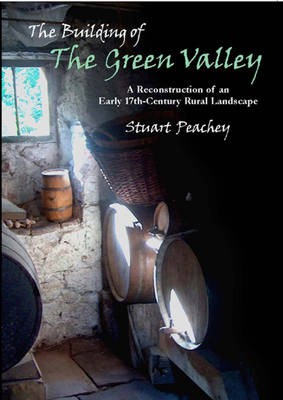
Book Review: The Building of The Green Valley

Is there a living history enthusiast out there who has not wished they could have their own historical manor house, castle, farm, village, etc.? Stuart Peachey has a 17th century farm, and wrote a book about the experience. The Building of The Green Valley: A Reconstruction of an Early 17th Century Rural Landscape (By Stuart Peachey, 2006, Heritage Publications) is not a really polished book, but it is a pleasant read, and for all of us history junkies it like reading our fantasies come to fruition. Stuart Peachey has been reenacting since the late 1970s and not too long into his reenacting career came into a bit of a windfall and with a group of friends bought some land in Wales on which there was the ruins of a17th century farm.

They bought it in order to have a place to do living history and reenactments and to that end they set about restoring the land, buildings, gardens, and fields to how it looked in the 17th century. The book is mostly a chronicle of the work that went into restoring the farm (or farms, really) and a chronicle of those people who invested a large part of their lives into the farm. The later chapters are guides to the research, animals, plants and infrastructure that went into the project (should one wish to attempt something like this one's self.)

One of the things that I noticed about the book is that someone (possibly Peachy himself) kept very good track of every person that contributed labor to the project. The main section of the book chronicles from 1987 until 2003 when the farm was complete enough to be used as the site for a reality TV show. All the work that was done on the site was done by volunteers. Hundreds of volunteers over more than a decade, and sometimes it seems like Peachey names them all by name. This can get a little tedious, but it also illustrates the fact that "the valley" project was very much a community project. The is politics, and personalities, there is real life. But still the project moved forward.

 And throughout the project  not a single person profited monetarily from the restoration. Everyone was content with the fact that they were building up a really cool historical setting. All the events held on the site were done with the intention to educate and possibly further invest in the site. The whole thing was done with very little money but a ton of labor. And a ton of historical research.

There is not very much info in the book on life in the 17th century, that is not the point of the book. But the amount of work that went into researching the buildings, their uses, the types of plants and animals re-introduced to the valley, and the people who lived and worked there all comes through in the stories and pictures. The book left me wanting fairly badly to visit the valley, especially during a living history event, but even more (and more dangerously) it gave me faith that a project like theirs is achievable. With enough goodwill and sweat equity, it is possible to have your own living history farm. Read this entry on entry page

Wednesday, March 2, 2011

Update to the LH Bibliography

I love to read. I read all the time. But it seems like there is always more to read and never enough time in which to read! I've added several more books to my LH Bibliography (top of the menu at right) and a movie! I'll jot down the new stuff here

At Reenactorfest a few weekends ago I picked up:

Living History, Brassey's Master Class by Philipp J.C. Elliot-Wright, 2000
which appears to be a book to help new reenactors pick a timeperiod, and portray it accurately. It is out of England and reminded me so much of:


Living The Past by Val Horsler, 2003
which is also out of England. I bought it for Stephen many years ago, and love pulling it back off the shelf but for some reason I had not put it on the list of books about Living History. It is definitely about Living History, even if it is more a tourist book than an academic one.


I also found this DVD at reenactorfest:


On His Majesty's Service, produced & directed by Maurice Depas, 2010
Stephen and I have watched it, but I think I want to watch it a second time before I review it.


Just recently a LHP listener and friend alerted me to a new article in Colonial Williamsburg's Magazine: Reflections on Reenacting: Seeking an Authentic Past in a Specious Present by D.A. Saguto, CW Journal, Winter 2011
Notes: Chock full of historical information and present information (like the number of current Civil War reenactors? I MUST find out where the author got that statistic.) Worth the read, I wish it was twice as long.

Included in the further reading section was a book I had not heard of:
War Games: Inside the World of Twentieth-Century War Reenactors by Jenny Thompson, 2004


And all this updating reminded me that my parents got me an LH book off my Amazon Wishlist:


Telling History: a manual for performers and presenters of first-person narratives by Joyce M. Thierer, 2009

I think those are all the updates for now. I'm sure I'll come up with more soon! Read this entry on entry page

Tuesday, January 4, 2011

Book Review: Dancing in the Streets

I first read Barbara Ehrenreich’s book Dancing in the Streets: A History of Collective Joy a few winters ago. There was a certain something that drew me to the book, though the details slipped away. When trying to figure out why I love Living History so much, and what drew me to the renaissance faire, I’d often circle around the bookshelf, and pick up Dancing in the Streets, but could not determine what I might have read that specifically talked about living history. When I wrote up my initial bibliography of books published on the subject of Living history, I wanted to put this book on there, but could not come up with a good reason why. Serves me right for reading a book while answering the phones at a temp job I was holding at the time. This time I listened to it on unabridged audio book.

Ehrenreich wrote Dancing in the Streets after writing a book on “the dark side of human collective excitement as expressed in human sacrifice and war.” In Dancing Ehrenreich delves into the human capability for collective effervescence, and communal ecstasy. In doing so she covers a lot of history: from Ancient Greece, through Rome, early Christianity, the European Middle Ages, the Protestant Reformation and Industrial Revolution, 18th and 19th Century colonialism, the invention of the modern military, African diaspora cultures, Fascist Italy and Germany, modern spectator sports and more. More importantly for me, in talking about the history of collective joy, Ehrenreich talks about singing and dancing, about rituals, and about pageants. Folks who talk about the history of historical reenactment, about Renaissance Faires, about Living History, generally have to go back to pageants.  Ehrenreich devotes several chapters in the middle of Dancing to the Medieval European carnival as a reminder of an earlier era when Europeans of all classes engaged in spiritual dances, and collective celebrations. Carnivals and pageants are fairly closely linked in Medieval Europe as forms of celebration. I have found so little written about the history of Reenactment, that a well written account of carnival pageantry is appreciated.

As a reenactor I’m often looking for convincing historical accounts of mindset and behavior in earlier periods, and Ehrenreich’s anthropological take on an ephemeral subject like expressions of collective joy really stuck with me. Ehrenreich is quick to point out the limitations of anthropology and of psychology, and ranges over a huge amount of historical ground, but does so in a manner that is easy to follow, and fun to both read and listen to.

I recommend this book to anyone interested in the history of western thought, anyone interested in knowing how communities have come together in the past, in learning about the thoughts behind celebrations of so many different times and places. This is a cool history book. Read this entry on entry page

Thursday, July 29, 2010

Living History Bibliography

As part of this blog I've put up a page which is a bibliography of all the books on Living History that I know of. To see it click on the Bibliography link on the left side of the page. I could only find 17 entries to put on my bibliography. That does not seem like very many to me, do my readers out there know of any others?

I am determined to read all the books I can find on living history and reenacting. As a reader, and someone interested in the culture of living History I really feel I've got to. Wish me luck, I'll be posting my reviews both here and as part of the Living History Podcast, then I'll be putting the links on my the bibliography page so you can tell how far I've gotten in my quest. Read this entry on entry page

Monday, July 26, 2010

Book Review: Knights Next Door

A few months ago I read a book similar to I Believe in Yesterday  in premise but completely different in feeling. The Knights Next Door by Patrick O'Donnell is about O’Donnell’s experiences spending a year in as a member of the Society for Creative Anachronism, or SCA. O’Donnell is a journalist writing from an outside perspective, but his girlfriend is in the SCA, and he has been to one or two events with her before he decides to jump in. He does join up expecting to write a book, but he seems to do so with a better understanding of what he is getting into, and a genuine interest in participating than anything shown in I Believe in Yesterday.

The prologue and every chapter of Knights Next Door starts with a quote from Shakespeare’s Henry V, which sets the historical mood, but also lets you know that the concentration is going to be on the more martial aspects of the Modern Middle Ages. The writer is from the mid-west and is able to join up with an SCA group called Darkyard, well known in the SCA for their fighting prowess, and gets help with his endeavors from a Cleveland group called “SFU” which stand for “Something For Us.” Over evenings and weekends they help O’Donnel with clothes, they lend him armor then help him make his own. He attends fight practices with his new friends, and learns all about the lives of the SCAdians he meets.
My favorite part of O’Donnell’s tale is that he gives voice to an amazing array of people that me meets. His chapter headings include The Contessa’s Tale, The Tale of Brannos’ Keep, The Teacher’s Tale and many more. Though we learn about the author’s first wobbly steps on the path to becoming an SCA fighter, he also gets his reader involved in the lives of those people who make the SCA a large part of their lives. We get to learn a little about a lot of different people, but we also meet a few individuals that O’Donnell follows for the year, and weaves throughout the book. We learn about their mundane jobs, about their love lives, about the trials and awards that are so important to some in the SCA. O’Donnell’s empathetic portrayal of some very real people made this into an enjoyable read as well as an informative one.

I also appreciated the frank discussions about the differences in what the SCA does and what we know of Medieval history. He discusses different levels of accuracy, and what different groups hope to get out of their involvement in the SCA. He discusses his transition from army surplus boots to some historical footwear, and how modern accoutrements will never be left completely behind. When discussing a visit to a spring time event in Mississippi called Gulf Wars he writes:
 “It takes about 2 hours for the SCA’s time warp illusion to kick in… for the garb, the people and the events to gradually pull me along. But eventually, my eyes start skipping over the modern tents, dismissing them as irrelevant background, while I focus on the more medieval items… The shift of mindset is crucial for anyone pursuing this hobby. There will always be anachronisms. Members see the full half of the glass rather than the empty half. If that moment never happens, if you can’t suspend belief just a little, you go home and dismiss the Society for Creative Anachronism as a waste of time.” (p. 107)

And towards the end of the book he justifies the open but forgiving tone in which he discusses most anachronisms and, un-period attempts:
 “I had scoffed at some of the makeshift equipment, at the passion many display for this game and at many of the “attempts” at clothing. But somewhere along the way, I had started looking beyond those shortcomings and started seeing things in a more forgiving light. It is easier to criticize something you don’t know and never try, I realized, than it is after you have struggled through the same, often difficult tasks.” (p.284)

He does not hide the less pleasant things he runs into: bitter internal politics, slighted members, a casual relationship with the history of the Middle Ages. But he manages to tell a sympathetic story all the same. I only have a few issues with his writing style: the clichés are a little thick, he repeats stock phrases a little too often for my comfort.  The chapters are broken into small chunks so he has or do a lot of re-introducing and repeating when we get to the next section about something or someone he has not visited in a while. He hints at story outcomes I could have waited to find out about. Still the book was easy to read and the story kept me engaged.

While I have attended many SCA events, and have friends and colleagues involved on many different levels in the SCA I am not an SCA member, I have never been a part of an SCA group. From my position as a well-informed outsider I learned quite a bit from The Knights Next Door. Read this entry on entry page

Wednesday, July 21, 2010

Book Review: I Believe in Yesterday


I am always delighted and a bit scared when I find out there is a new book out there on Living History. I am delighted because there are not a lot of books out there on living history, and scared because not all of them are the most flattering to our quirky community. I am especially scared when a book is written by someone who is not even tangentially involved in the community, because I know we look like weirdos from the outside. I’m not sure someone on the outside can understand why so many of us are so passionate about history and about re-creating it. I am even more on alert when I find out the author of a new LH book is not an academic or anyone who studies people in order to find out about people. He is a journalist who writes quirky and often dark travel type books about his misadventures in foreign lands. Well, I always knew we were a tourist destination, how bad can it be?

I got the book: I Believe in Yesterday in audio format because it was the only format available in the US and because I have a very long commute so I like audio books. While the audio format has the subtitle: A 2000-Year Tour Through the Filth and Fury of Living History, the paperback has the subtitle: My Living Hell in Living History. And that really sums up this guy’s story.

Tim Moore is happy in his suburban life in an old house that he had extensively modernized, but one day he feels the pull of nostalgia, and wonders if he can make it as his ancestors had to live. I also wonder if he was desperate for another book idea since his previous books all seem designed to put him in awkward positions, what could be more awkward than going back in time when everyone knows it was rough and miserable? He visits 7 different centuries in seven chapters. Actually, instead of visiting the centuries, because as far as I know no one has yet to invent a time machine-- he visits, and participates in, reenactments of those different times and places. He goes in woefully unprepared and manages to make an ass out of himself in almost every situation. If you enjoy reading about someone else’s misery, then I recommend this book.

To be fair, I think he treats all the reenactors, living historians, and quirky characters that he meets very fairly. He does not make fun of them in writing, really only himself. He does manage to lie to them, a lot. He leaves folks with the impression that he knows what he is doing, then writes about how he tells the public all the disinformation he can make up, he ignores people’s warnings, does not do what they tell him to do (even if he has volunteered to do it in the first place) and generally makes himself and those around him more miserable in the process. The book would not be a bad book, if the author/narrator was not trying to be such a dumbass.

I enjoyed his descriptions of a wide variety of historical levels, of timeperiods, of types of reenactors, and environments. He managed to find seven very different experiences, each one had something unique to say about Living History and the folks who participate in living history. The first chapter was an Iron Age settlement that had been sold by the folks who built it to a guy who didn’t care, the second chapter he joined a group of Roman reenactors from France at an event in Denmark, the third chapter he spent a weekend with some crazy Vikings. The next few chapters he spent with more established living history enterprises, chapter 4 he spent at a Burgundian castle, and actually enjoyed himself playing with the cannon crew, chapter 5 he spent a week as a servant at a well established Tudor manor house. This chapter was the one that infuriated me the most. He got a job, got training, had someone make him a great set of clothes. And he totally blew it. He was surrounded by 300 other people, all reenacting the same thing that he was, and the best thing he did during the whole week was run and hide! He did the most damage to other people during this chapter, and I was so disgusted by the fact that he could have had a grand time and totally muffed it that I could not go back to the book for some time once this chapter was over. Chapters 6 and 7 were a little better in that by then he was a little less scared of bugs, he did not try to fight, he was never put in a position of any responsibility. For the last two chapters he tagged along at two reenactments in the USA, the first on a walk with a wagoner from the 1770s the second he shuffled around a Civil War reenactment in Louisiana as a war correspondent. He was lost for most of the chapter, but folks were so nice to him, and by the final chapter he had stopped complaining.

He had also, it seemed to me, stopped trying to find out what drew folks to re-live these rougher times, he had stopped trying to figure out if he could survive and just let other people do the surviving for him. The lessons were there if you are willing to look hard, but the end of the book still felt abrupt to me. I wish the dolt had learned more than the fact that it is possible to sleep under the stars with your head in an ant hill. I know I learn more and experience more every time I go out and do this, and I have not had nearly the opportunities for adventure that this guy had.

Read this entry on entry page